Can I ride a scooter on the freeway? The answer to that question depends on your scooter, your level of riding expertise, and the freeways to plan to ride on.
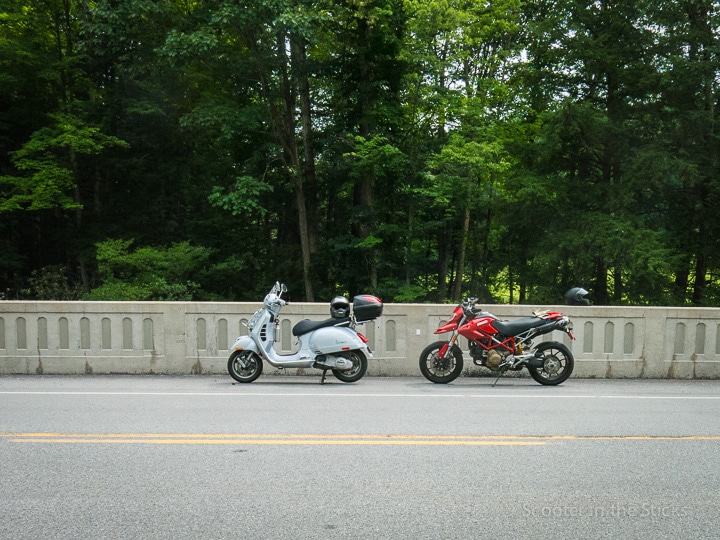
Scooter on Interstate 99
There’s little traffic on Interstate 99 at 7am on Saturday morning. Riding on a rural freeway with little traffic is markedly different than trying to ride on a main transportation artery jammed with cars and trucks around the clock.
To start, many people, motorcycle riders and scooter riders both, think a scooter is only suitable for riding around town. A lot of motorcycle marketing suggests that the choice for riding big miles on big roads involves 500 pound plus machines with engines capable of propelling you at speeds north of 100mph. Over the years manufacturers have successfully pushed the notion of a “real” cruising motorcycle to something with an engine that has 1000cc or more. Bigger is better in the mantra and it applies not only to motorcycles and scooters but to automobiles, pick-up trucks, houses and practically everything other than waist size.
If you can disconnect your head from the marketing absolutes and industry propaganda you can see a glimmer of what’s actually possible with smaller machines — scooters or motorcycles.
The Highway Scooter
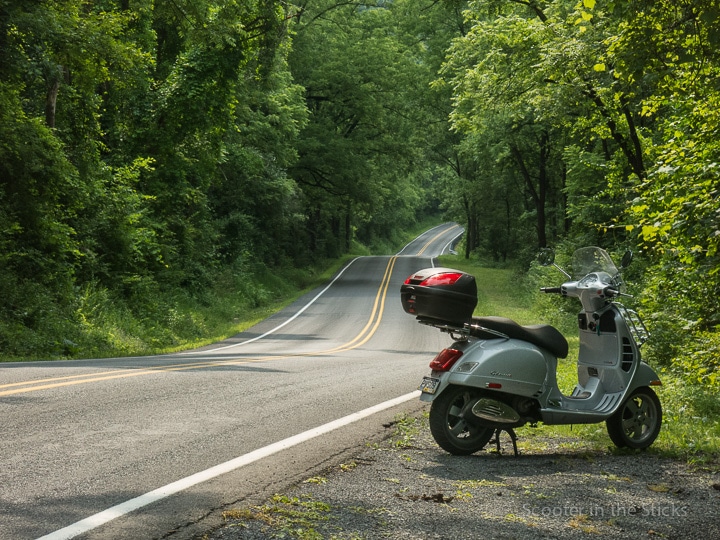
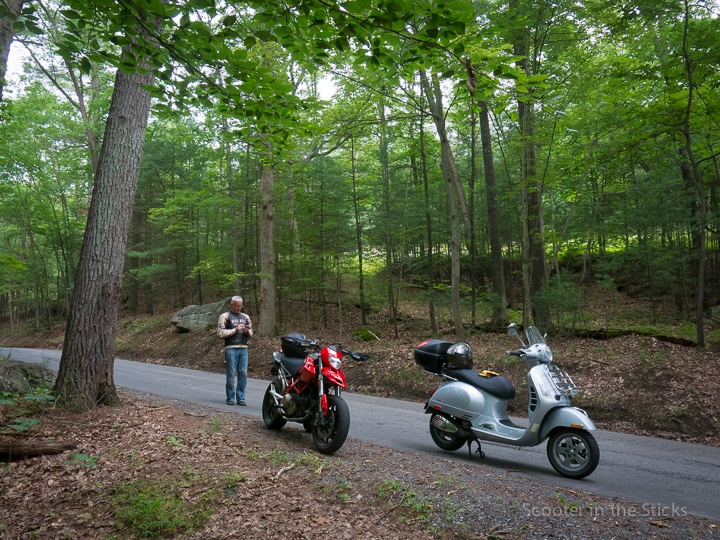
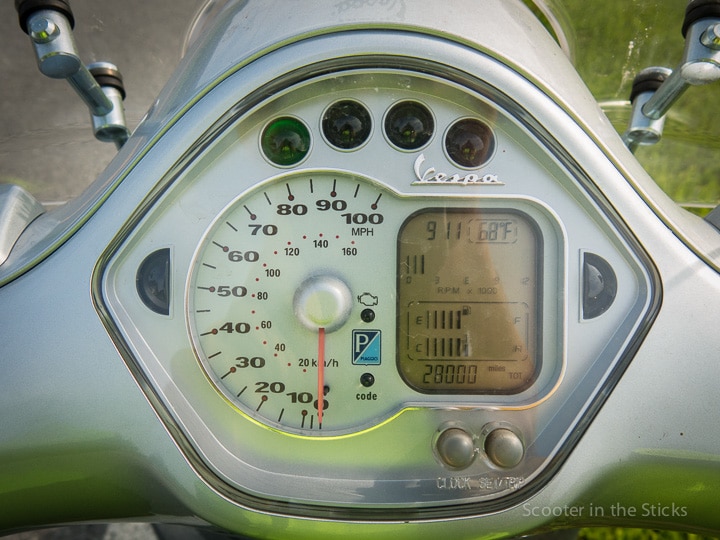
The reality is you can ride a scooter practically anywhere save for some hardcore off-road tracks involving deep mud and water. My Vespa GTS 250 can run all day at 65mph without a problem and faster if I need to. On this recent 55 mile run down I99 I was passing cars, what few there were.
There are just a few things you need to consider in regarding to a scooter on the freeway. First, is it legal? Some freeways have engine size or horsepower minimums. Make sure you meet those. In most states, if not all, you can’t ride a 49cc scooter on an Interstate highway. I’ve ridden 150cc and larger scooters on freeways without a problem.
For me, one of the bigger issues about being on a smaller scooter is stability. There is no doubt that a 500 pound plus motorcycle with big wheels will feel more stable, respond less to the air blasts of passing trucks, and deliver a more sedate ride. But that does not mean a smaller machine is not stable. It sticks to the road and follows a line just fine. But be prepared for some beating by the air, especially if you’re riding along at 70mph and there’s a crosswind.
LEVEL OF RIDING EXPERTISE
Mentally, the most frightening riding thought for a lot of scooter riders is the freeway even though it may be a safer place to be that on a lot of crazy action on surface streets. Recently, a local rider told me she now commutes on the expressway because of the higher danger of being clipped on local streets at rush hour. Still, riding on an expressway has its own unique demands of a rider — traveling at higher speeds and being comfortable maneuvering and stopping in an emergency being two important skills that should be in your toolbox.
Riding at expressway speeds, 55 to 75mph means things happen pretty fast and you really need to have sufficient skill to make quick decisions and translate them into action on your scooter. It could be a need to evade a piece of truck tire, or dodge a pothole. While the low speed skills theoretically apply to higher speed riding you really need to do some practice. I would suggest anyone considering riding on an expressway try and do some gradual practice to get comfortable with the speed and how the scooter responds at higher speeds. That could mean some early morning weekends on the pavement to experiment.
Riding defensively is important too. You’ll need to be aware of lane placement to keep yourself visible and learn to anticipate when you’re more vulnerable to someone nudging you into oblivion.
THE FREEWAY
Not all freeways are the same and they’re differentiated by speed, amount of traffic, and the quality of the road surface. Heavy traffic moving at 70mph on a badly crumbled surface is a nightmare compared to an relatively empty highway with a new surface where you can ride at any speed and it won’t matter. Make sure you know what you’re getting into.
Make sure you have sufficient power to travel along at a reasonable speed considering other traffic If you’re considering commuting at rush hour where traffic crawls along it won’t matter much. But if you’re considering a ride on a main artery where there is a lot of traffic and it’s moving fast you want to make sure you can move with it, or at least near that speed. I’ve parked myself behind a slower moving RV, truck or car more than once to move along a high speed expressway so I would be more “visible” as a slower moving vehicle.
The idea of “sufficient” speed is where scooters get dismissed. If you can’t rocket away from trouble or travel faster than everyone else then you can’t ride on the freeway. Similar thinking applies to automobiles. But being able to pull yourself out of trouble is probably the wrong way to think about riding. It may be better to consider how not to get in trouble in the first place.
Do I Belong on the Freeway With a Scooter or Small Motorcycle?
Deciding to ride a scooter on the freeway is a personal choice dependent on a variety of issues. There is no right or wrong answer. There are plenty of scooter riders who travel freeways and Interstate highways every day. A lot of riders avoid big highways simply because they aren’t much fun. After all, they’re designed to get you from point A to point B fast and little more. It’s hard to enjoy the scenery when you’re flying fast and paying attention to a crowd of vehicles.
I ride on the expressway sometimes when I commute to work, or need to get somewhere quickly and the Vespa is fully capable of undertaking that task. Is it as comfortable as some of the big BMWs I’ve ridden? No. But it has advantages over those motorcycles in other situations that I ride in more often.
So, can you ride a scooter on the freeway? The answer is a qualified yes.
Perhaps readers can share their thoughts and experiences regarding a scooter on the freeway…